Grow with every session.
For learners who know some grammar and want the words to stick: more than 1,190 words and 2,100 sentences to read, hear, write and say, a few minutes at a time.
Coming soon to theApp Store
Watch the tree growFree. No ads, subscriptions or in-app purchases. In English and Spanish.

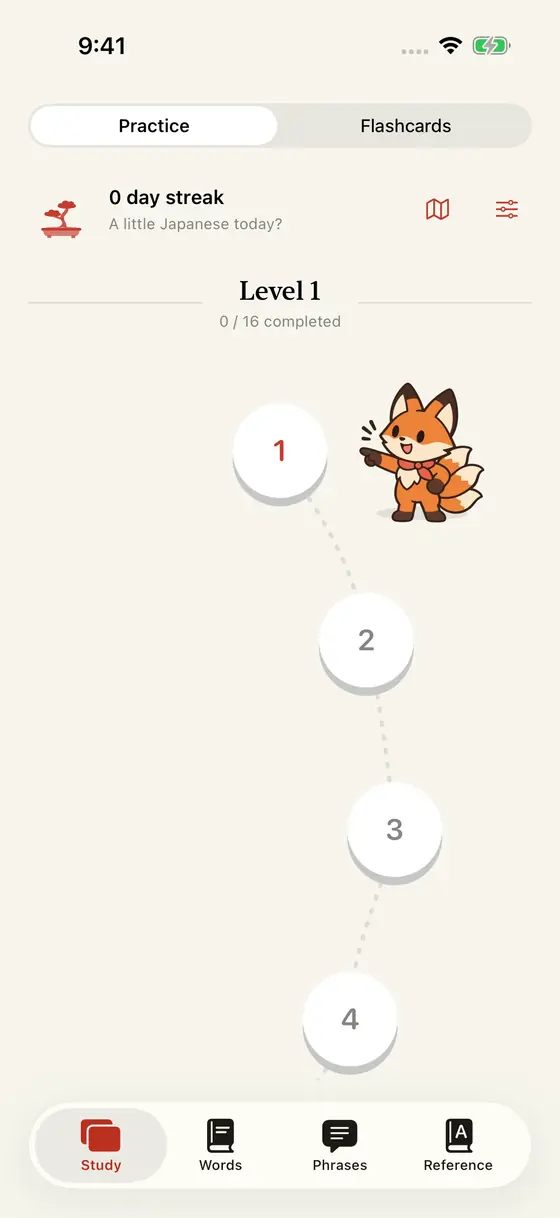




Ten levels, a few minutes at a time
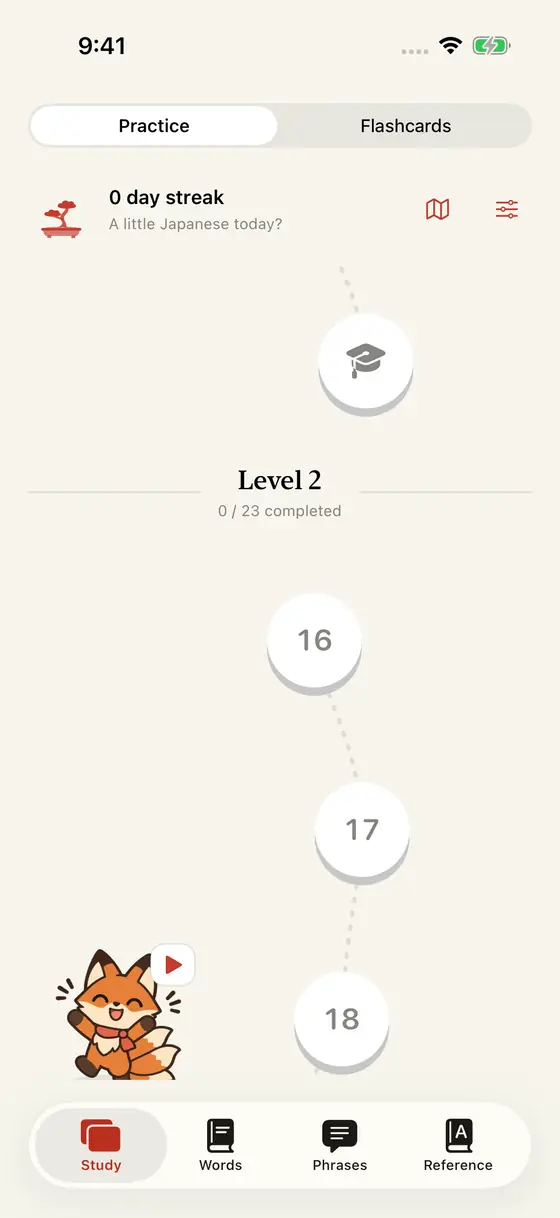
Each session is short and the path always shows the next one. Kanji and katakana arrive gradually, as you're ready for them.
Four friends, one job each
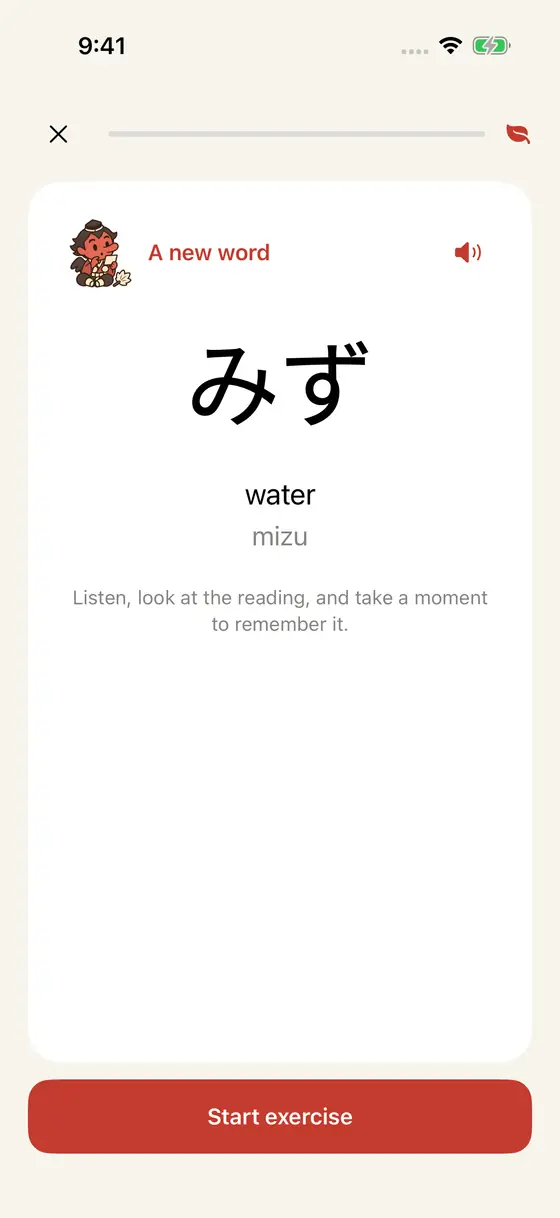
Four characters from Japanese folklore keep you company, and each one turns up for a reason.
Kitsune狐
The guide
Points you to the recommended session on the path, studies alongside you and cheers a right answer.
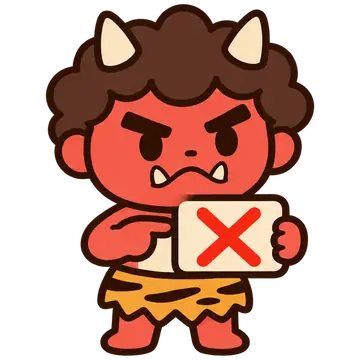
Aka Oni赤鬼
The corrector
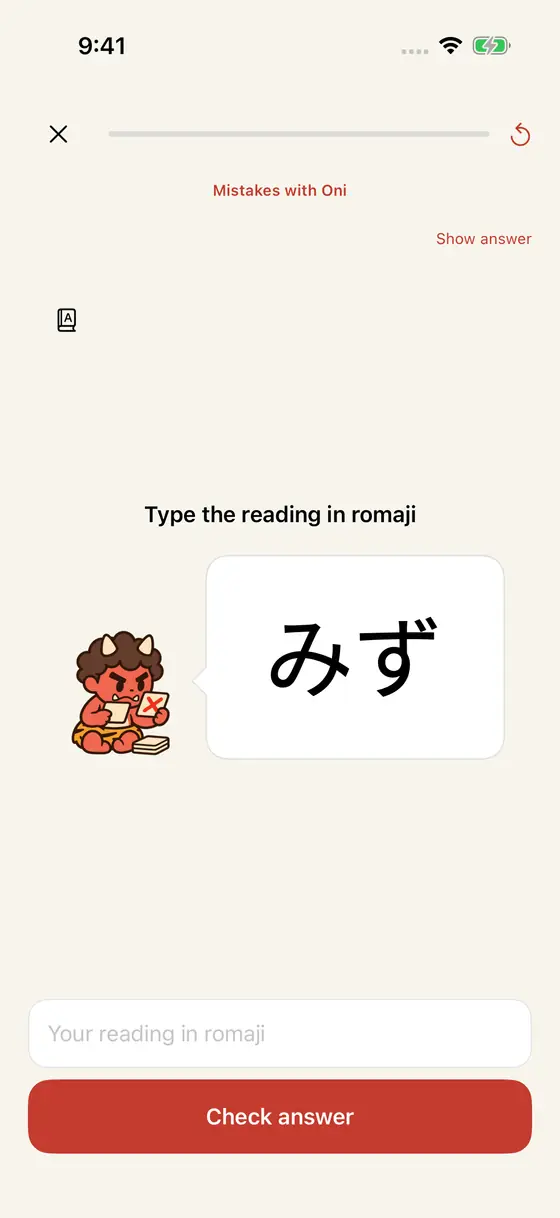
Turns up after a wrong answer to explain the right one, and offers a review of earlier mistakes.

Tanuki狸
The cheerleader
Applauds the effort, celebrates a finished session and offers listening practice with words you know.

Tengu天狗
The teacher
Introduces new activities and offers kana practice from the path, reading and tracing.
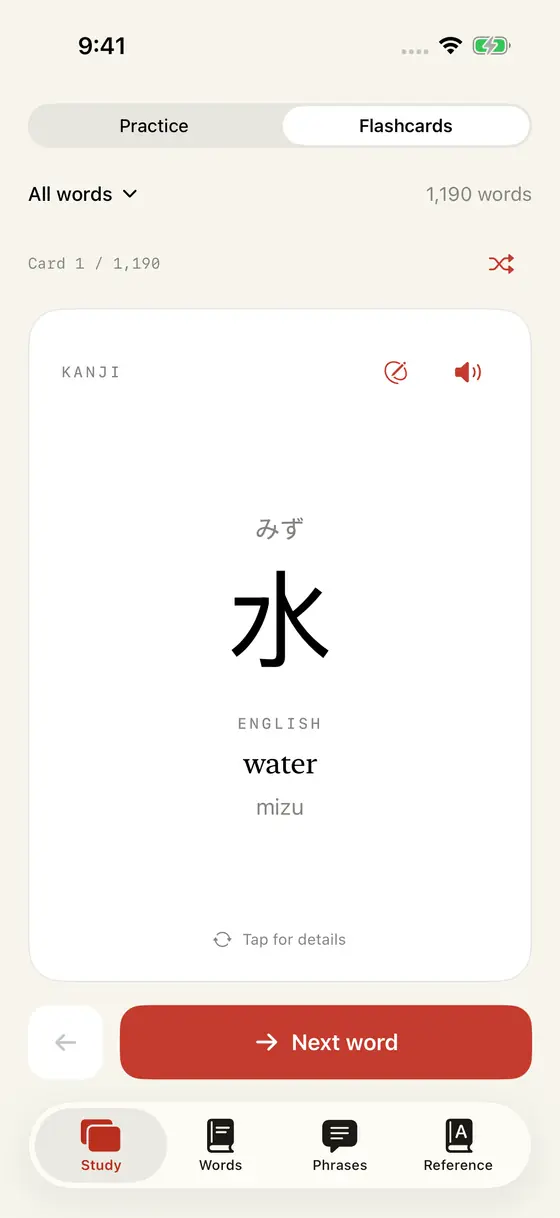
Every way to write a word, on one card
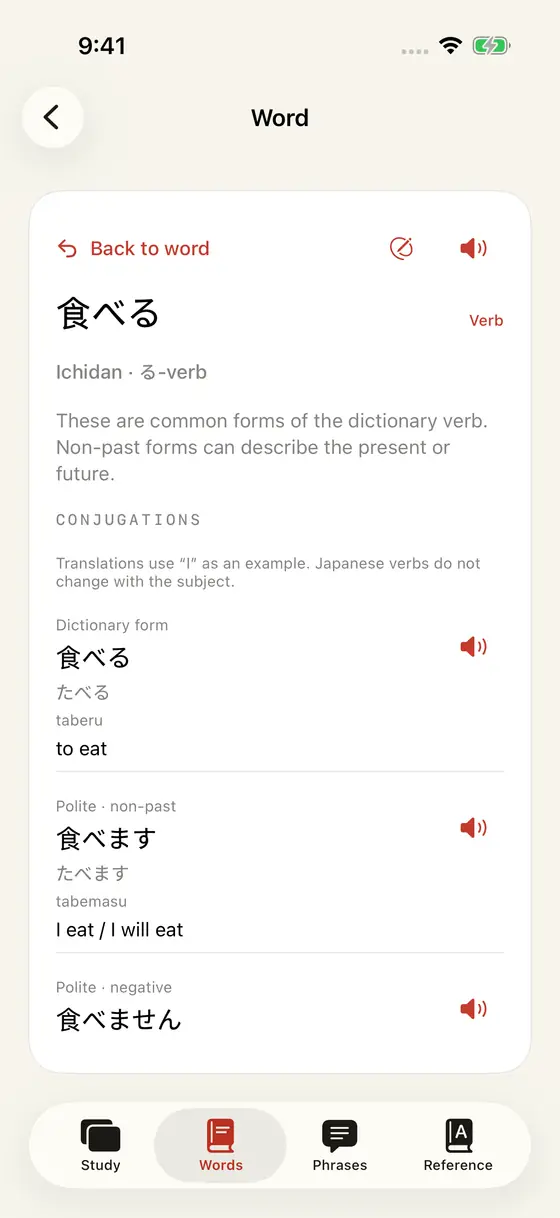
Swipe through the deck in your own time. Flip a card for its details and, for a verb, its conjugations.
- Kanji with furigana, hiragana, katakana and romaji
- The meaning in English or Spanish
- Pronounced by your device's own Japanese voices
One word, asked five ways
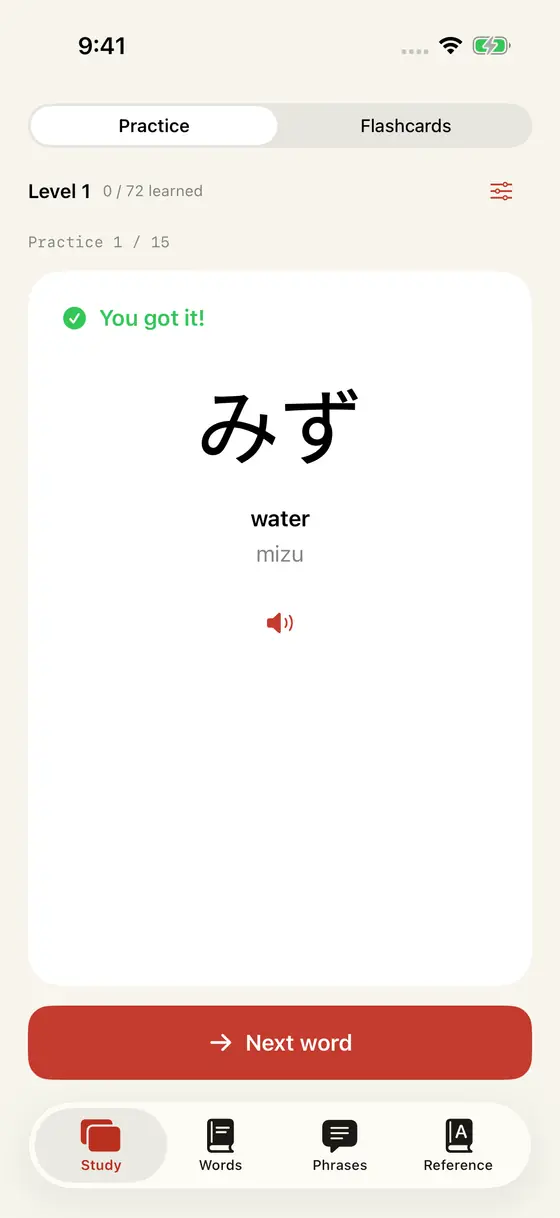
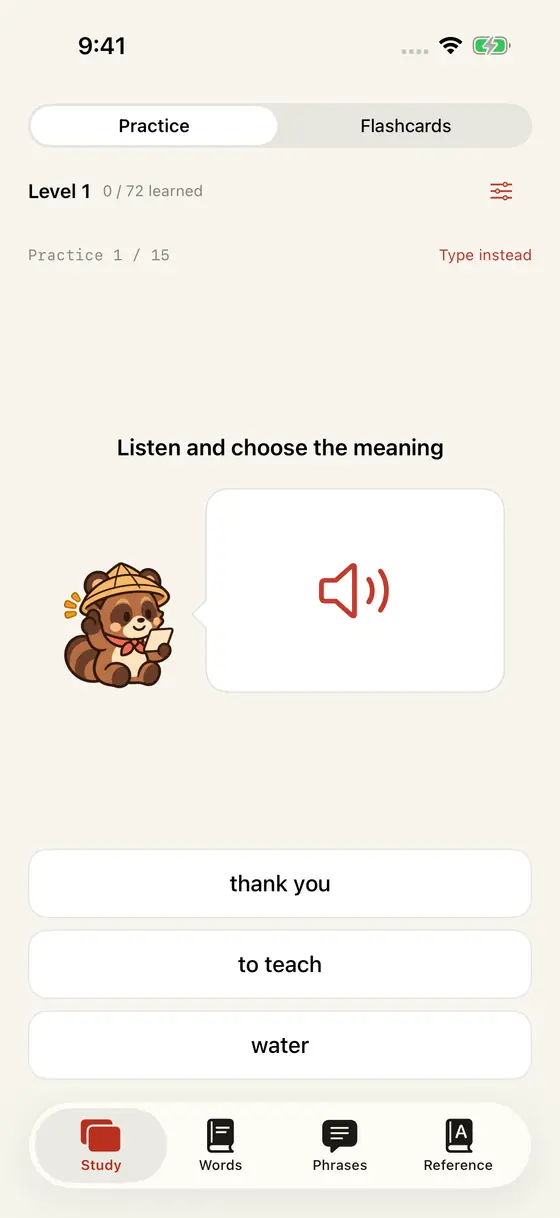
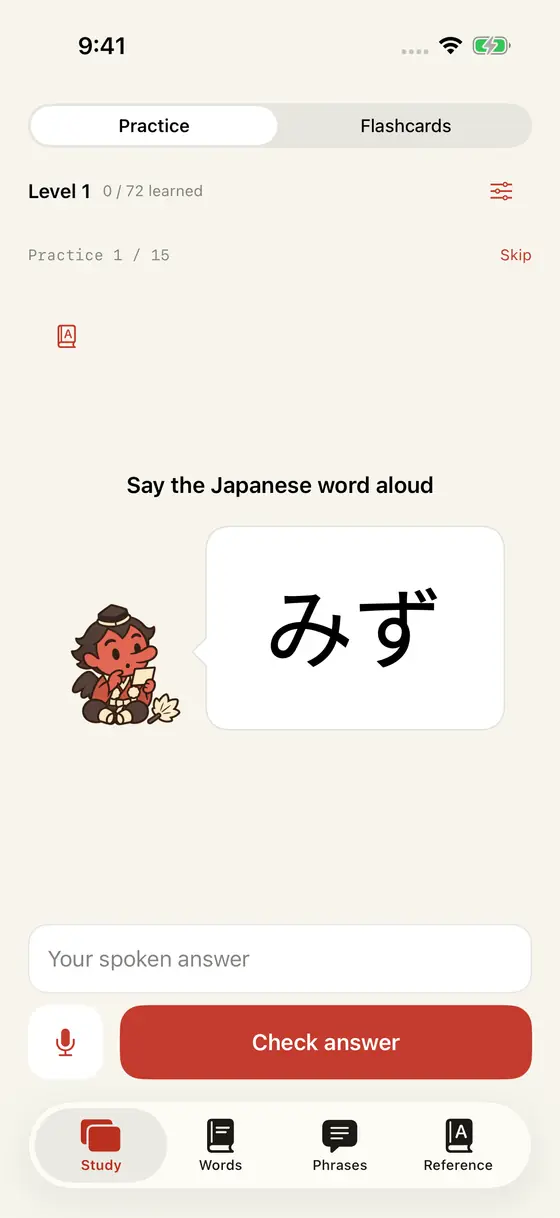
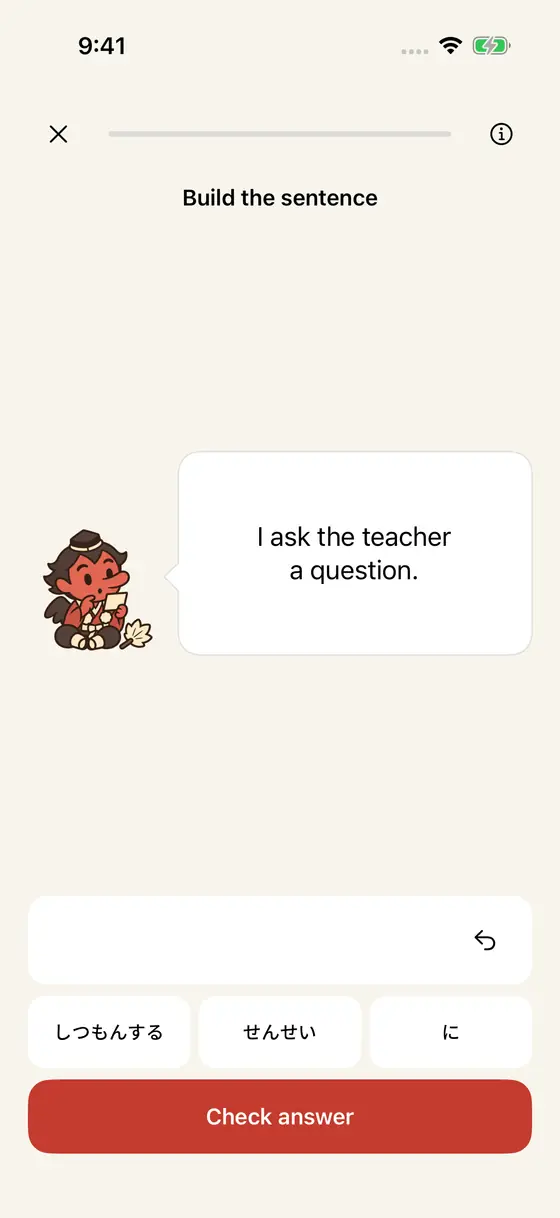
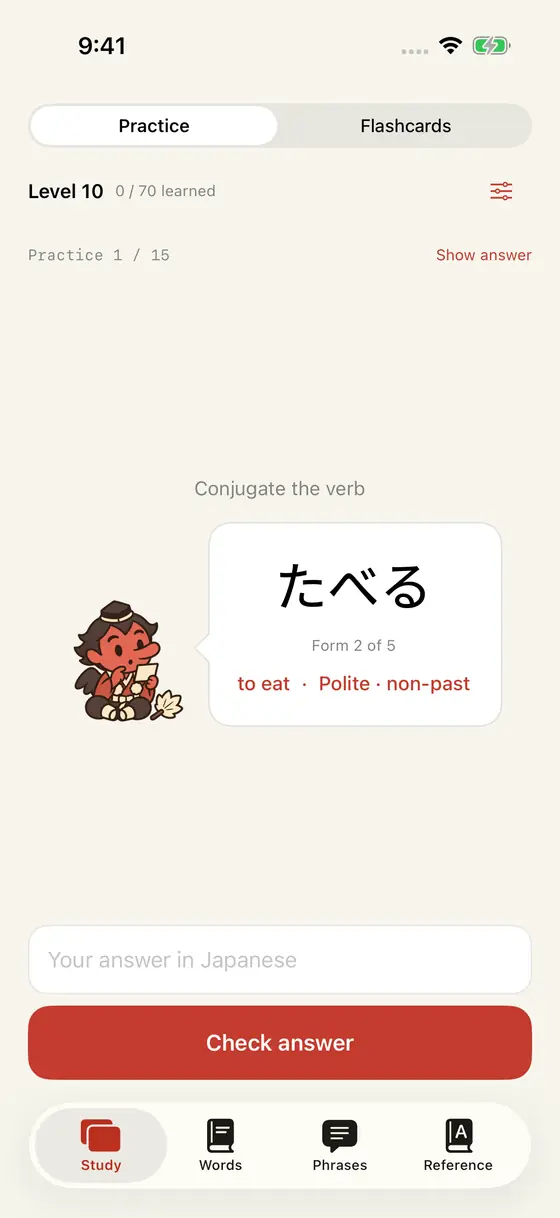
A session mixes the questions, so you recognise a word, recall it, hear it and use it in a sentence. Mistakes come back until they stop being mistakes.
- Listen and chooseHear the word in a Japanese voice and pick its meaning.
- Say it aloudOptional, and recognised on your device itself.
- Build the sentencePut a real sentence back together from its words.
- Conjugate the verbTurn たべる into the form the question asks for.
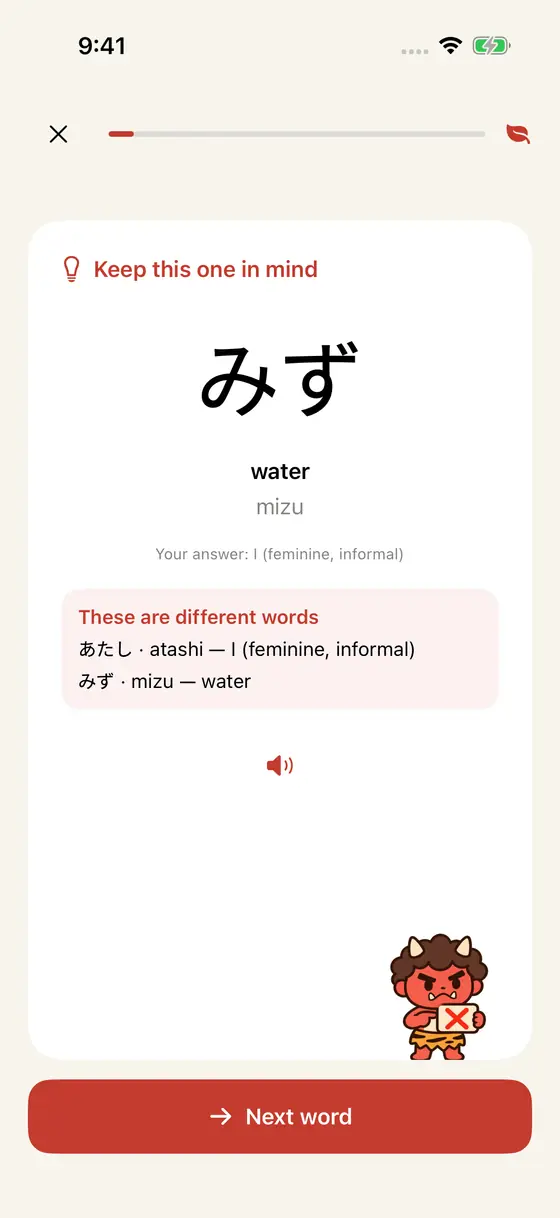
- Learn from a mistakeAka Oni shows the right answer and what set it apart.
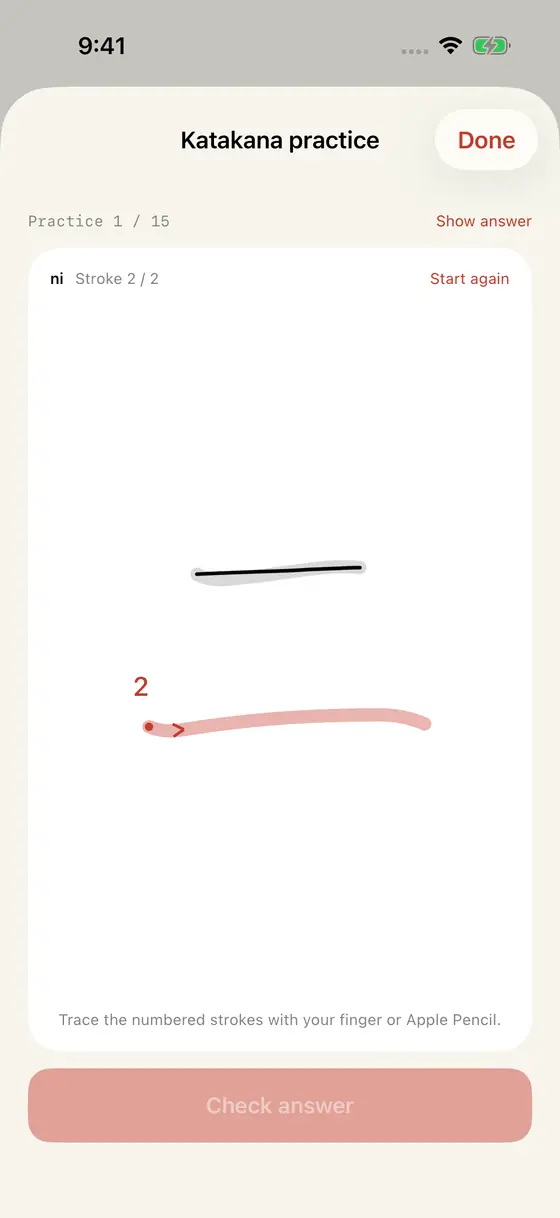
Trace kana with Apple Pencil
Write hiragana and katakana with a finger on iPhone or with Apple Pencil on iPad. Each stroke is checked against its stroke order as you draw.
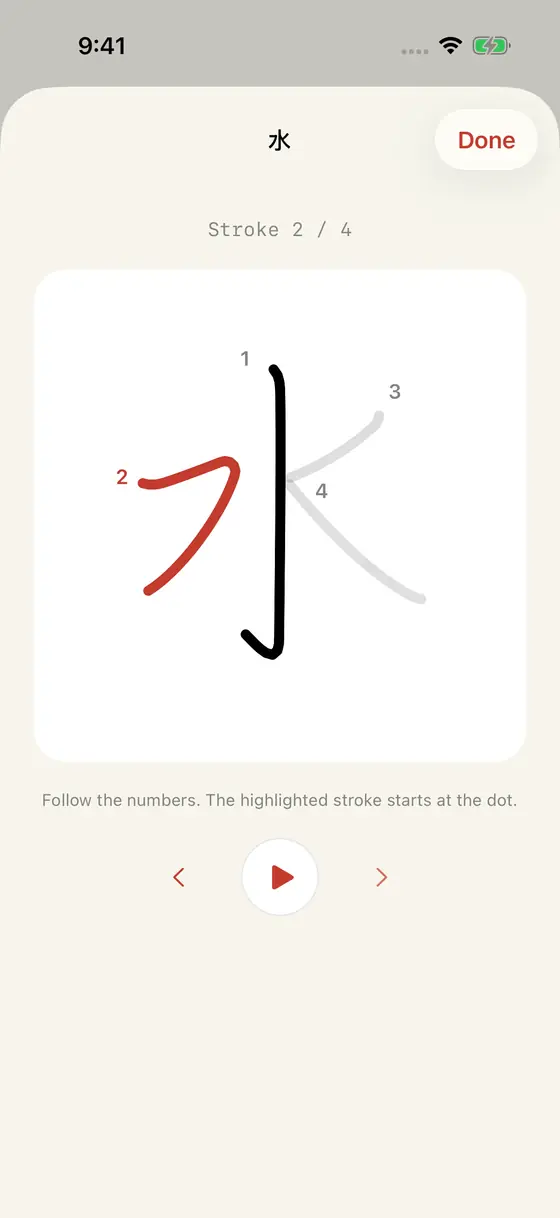
- Animated stroke order for every kana and kanji
- Hiragana and katakana tables to look things up
Everything else in your pocket
The references and details you reach for between sessions.
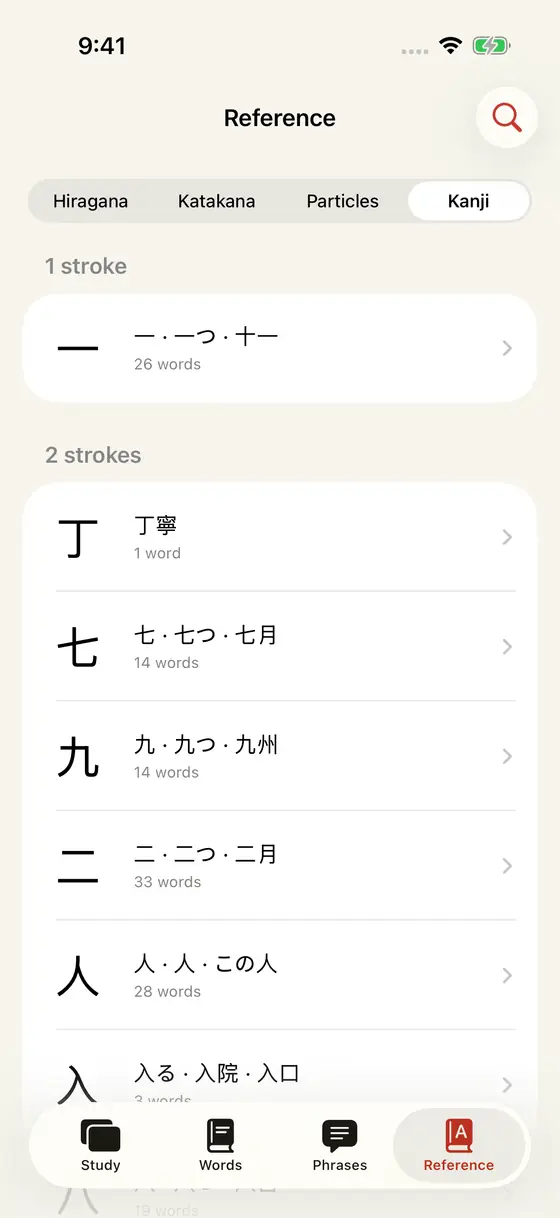
Kanji by stroke count
Every kanji in the reference, grouped by its strokes, with the words that use it.
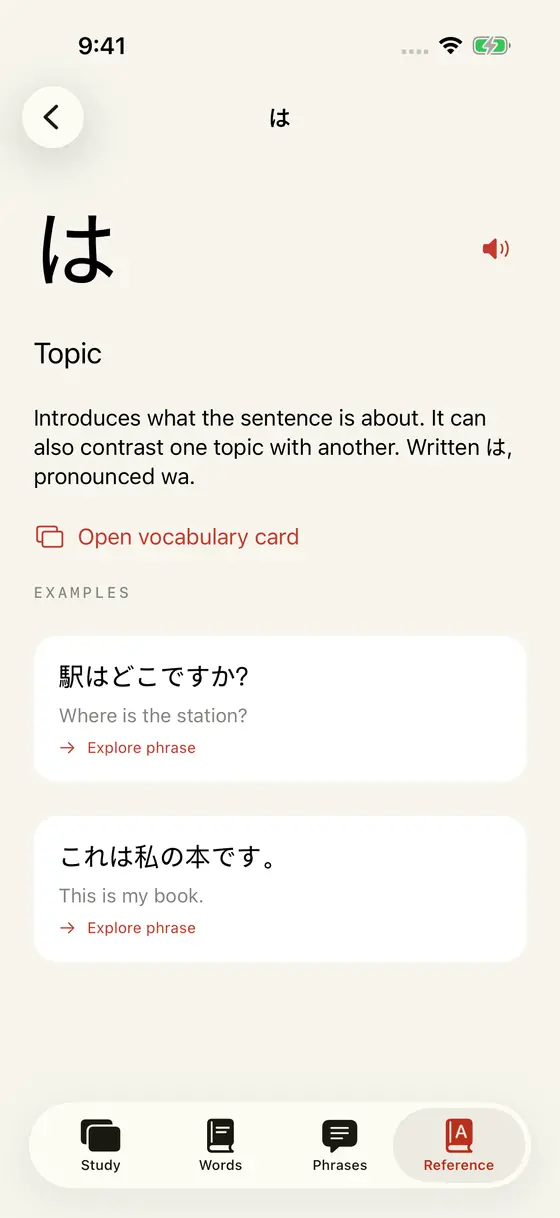
Particles, explained
は, が, を and the rest: what each one does, with example sentences.
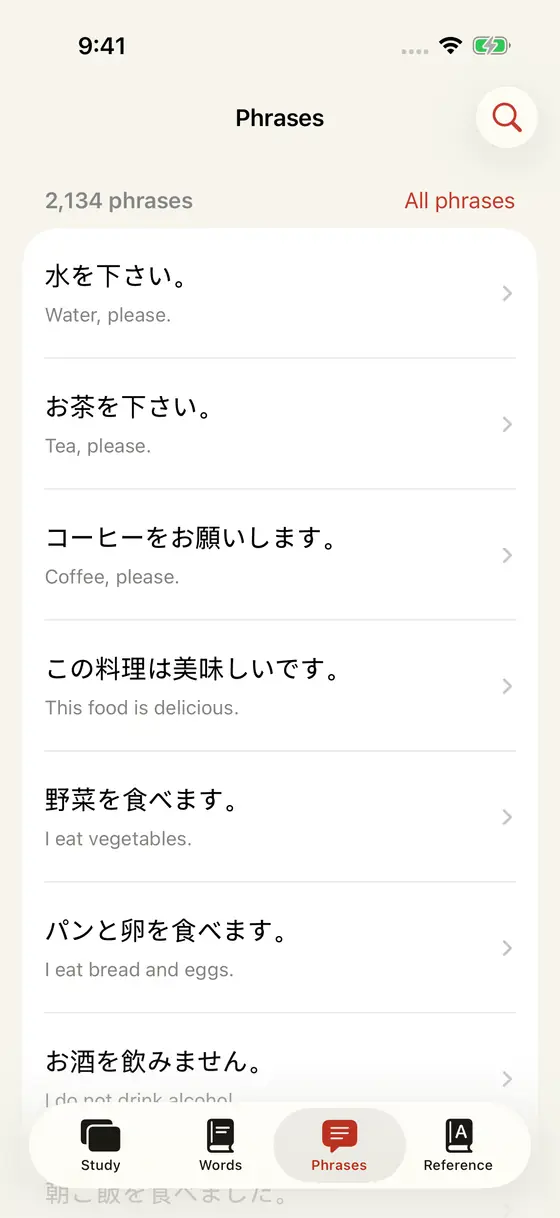
More than 2,100 sentences
Real sentences for the words you learn, with the translation in your language.

One quiet reminder
Once a day at the hour you pick, morning, noon, afternoon or evening. Or never.
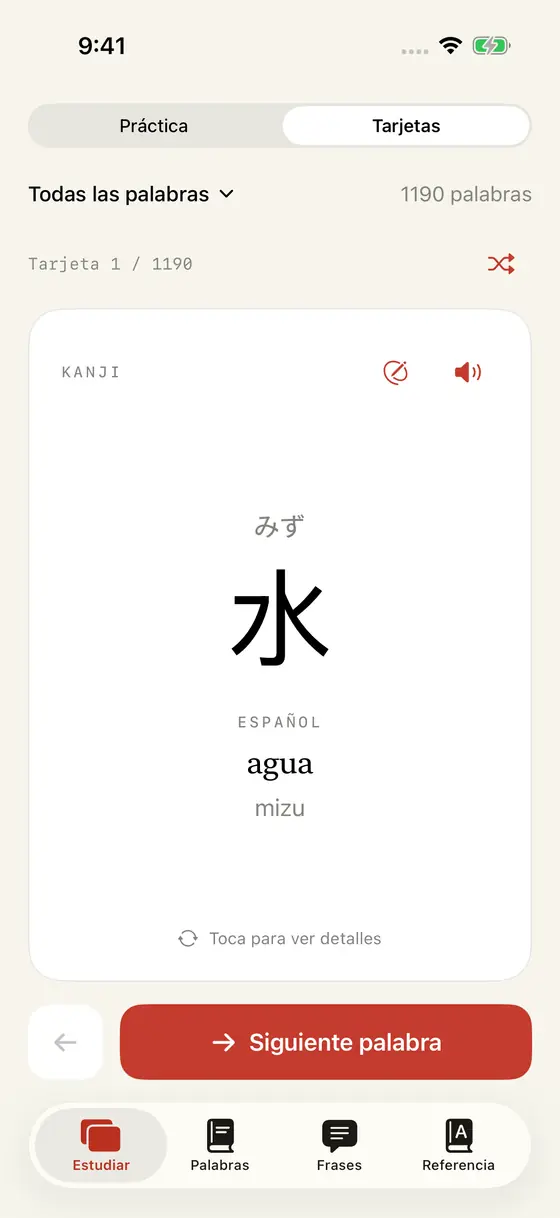
In English or Spanish
Meanings and every screen in either language, and each language keeps its own progress.
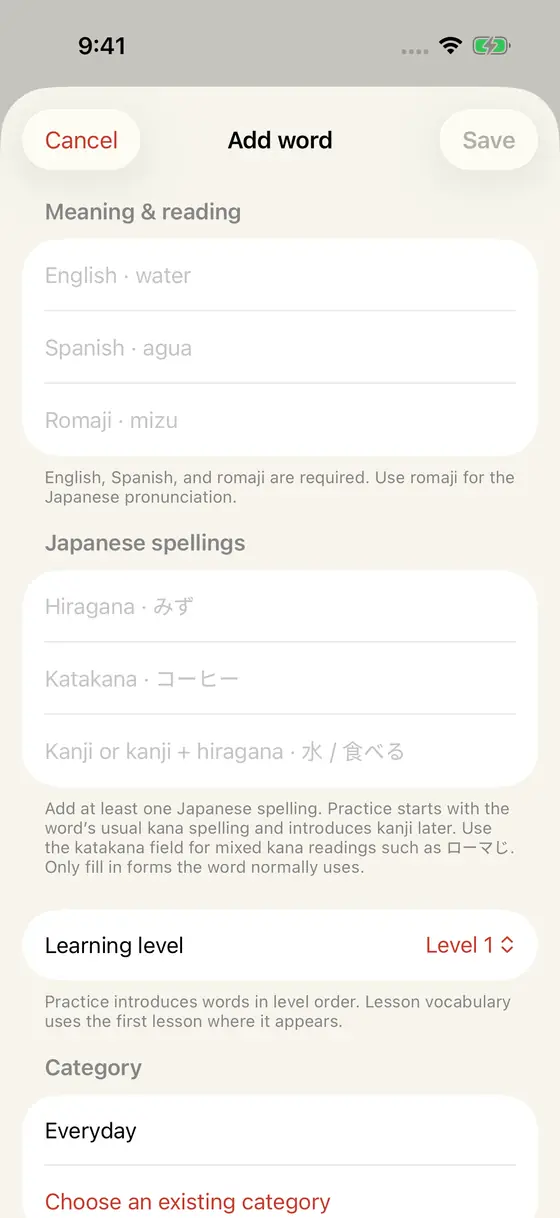
Your own words
Add a word you met elsewhere and choose the level where practice introduces it.
A tree that only grows
It grows with the days you practise, not with your streak, through ten stages from the first session to a year. Missing a day never shrinks the tree.


Practised days, from the first session to a year. Several sessions on one day count once.

Skip the weekend, keep the tree.
The streak counts days in a row and starts over after a gap. The bonsai counts every day you practised, so a busy weekend costs you the streak and nothing else.
- Day
- Friday
- Monday
- Streak
- 23 days
- 1 day
- Practised days
- 41
- 42
- Bonsai
- 30-day tree
- 30-day tree
Practice, one glance away
Put the bonsai and a word on your Home Screen. Tap the word to open its flashcard.

 Practice bonsaiSmall and mediumYour tree, the streak, whether you practised today and the words you've learned.
 Word of the daySmall, medium and largeIts Japanese spelling, its reading, the meaning and the romaji. Tap it for the flashcard.
Your practice stays yours
No account and nothing to sign in to. Wakaba keeps your practice on your device and your progress in your own iCloud. Privacy

- No ads, analytics or tracking
- Practice runs on your iPhone or iPad
- Progress syncs through your private iCloud
- Speaking practice is recognised on the device
Before you download
Who is Wakaba for?
People who already know some Japanese grammar and want to remember words, recognise them when they hear them and use them in context. It doesn't teach the whole language from scratch.
How much does it cost?
Nothing. Wakaba is free, with no ads, subscriptions or in-app purchases.
Which devices does it run on?
iPhone and iPad with iOS or iPadOS 17 or later. Your progress follows you between them through iCloud.
Which languages does it speak?
The app and every translation come in English and Spanish.
What happens if I miss a day?
Your streak starts over the next time you practise. The bonsai counts every day you've practised, so it stays exactly as it was.
Can I add my own words?
Yes. Add words to your library, edit any entry, and choose the level where practice introduces them.



Plant the tree with one session
Wakaba is free on iPhone and iPad, in English and Spanish.
Coming soon to theApp Store
Questions? Write to support